Binary options for beginners compared with spot trading and which start is better and why
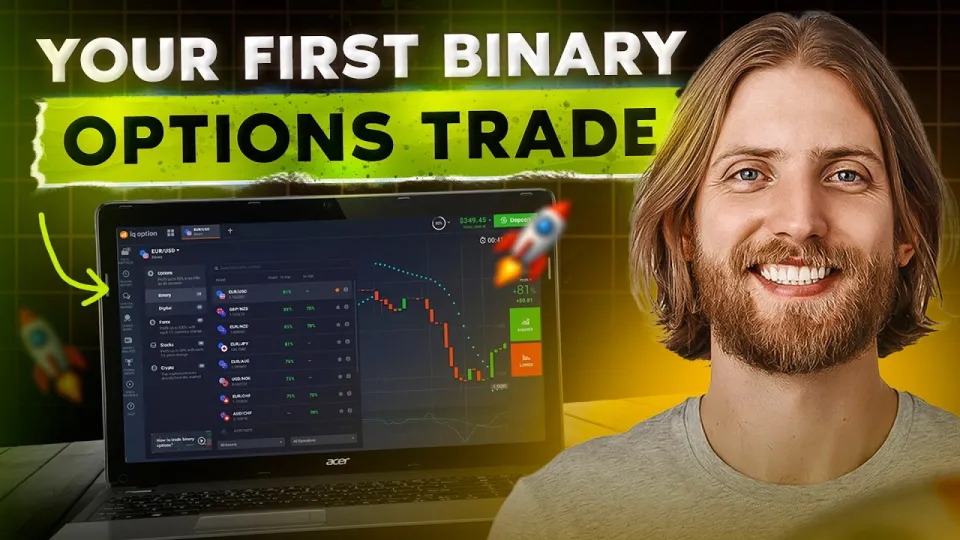
Video: Binary Options | Binary Options Tutorial for Beginners | Where Should You Start?
· based on the channel Binary options tutorial for beginners
Binary options are fixed-risk contracts: you predict whether an asset will be above or below the current price at a set expiry, and a correct call pays a fixed percentage while a wrong one loses the entire stake. For a beginner the best start is not a strategy but arithmetic: know the payout, know the break-even win rate it implies, and only then open a demo account on a platform such as Quotex to test whether you can beat that number.
What binary options actually are and how a trade is settled
A binary option is a yes-or-no bet on price direction with three fixed parameters: the asset, the expiry time and the stake. You choose the direction (higher or lower than the entry price), the broker freezes the stake, and at expiry the contract settles automatically — there is no partial exit and no stop-loss inside the trade. That single design detail explains most beginner losses: the risk is 100% of the stake from the moment you click, so position sizing matters more than the entry signal.
Two numbers define every contract. The payout percentage (typically 70–92% on major currency pairs, lower on crypto and stocks) and the expiry length (from 30 seconds on some platforms to a day or more). At a 70% payout a winning trade returns 1.70x the stake, so the break-even win rate is 1 / 1.70 ≈ 58.8%. At 85% it drops to about 54%. Anything below that and a long series of trades loses money even if you are right more often than wrong.
Binary options tutorial for beginners and the step-by-step start
A beginner's first month should follow a fixed sequence rather than a hunt for a "winning indicator". The order below is what the tutorial format on the Binary options tutorial for beginners channel is built around, and it works with any broker.
- Pick one asset. EUR/USD or another liquid pair with a tight spread; avoid exotic pairs and low-cap crypto where the payout is poor and the price jumps.
- Fix the expiry. Choose one length — 5 or 15 minutes is a reasonable default — and keep it constant so results are comparable.
- Learn the payout table. Write down the payout for your asset on each platform; it changes by time of day and by expiry length.
- Compute the break-even win rate from the payout before trading, not after.
- Trade a demo account for at least 100 trades and log every one: asset, expiry, direction, result.
- Move to live only with 1–2% of the balance per trade, and only after the demo log shows a win rate above break-even.
Quotex, Pocket Option and Binarium compared for a first account
All three platforms named in the tutorial are short-term fixed-payout brokers with similar mechanics: a web and mobile terminal, expiries from about one minute, a demo balance, and payouts in the 70–90% range on majors. The practical differences for a beginner are the minimum deposit, the minimum trade size, the asset list and the interface language.
- Quotex — low minimum deposit, a clean chart with a handful of indicators built in, expiries from one minute, and a demo account that mirrors the live terminal. It is the most common first account because the barrier to entry is small.
- Pocket Option — a wider asset list including more crypto and OTC pairs, social and tournament features, and a slightly larger minimum trade. The extra instruments are useful later, not on day one.
- Binarium — a simpler, more classic layout with fewer distractions, which suits a beginner who wants to focus on one or two pairs.
None of the three is a regulated investment venue in the EU or UK sense; treat the choice as a choice of interface, not of safety. A beginner should also run a VPN only where local rules require privacy, not to bypass a jurisdiction's restrictions — the restrictions exist for a reason.
How much a beginner should risk and why the expiry length matters
Risk per trade should be 1–2% of the account, which on a 50-dollar balance means 50 cents to one dollar. This is not conservatism for its own sake: with a 60% win rate and 70% payouts, a run of five losses is statistically normal, and at 10% per trade that run wipes out 40% of the account. Flat staking — the same amount every trade — is the only sizing method that keeps the math honest; martingale (doubling after a loss) turns a 60% win-rate system into a single-trade ruin.
Expiry length changes the difficulty of the prediction. A 60-second contract on EUR/USD demands a move of roughly 0.70 pips to pay out, which is inside the noise and spread; a 15-minute contract asks for a directional view that technical levels and news timing can actually support. Beginners almost always start too short. Moving the default expiry from one minute to fifteen is usually the single largest improvement in a beginner's results, because it removes the reflex clicking that short expiries encourage.
Typical beginner questions about payouts, withdrawals and regulation
The most common doubts are not about strategy but about money mechanics. Payouts are quoted per asset and per expiry and are not negotiable; a broker showing 92% on one pair and 68% on another is pricing volatility and liquidity, not favouring you. Withdrawals usually require identity verification and a minimum amount, and bonus funds typically carry a turnover requirement — a deposit bonus is a trading obligation, not free capital, so declining it keeps the account simple.
Regulation is the question beginners skip and later regret. Binary options are banned for retail clients across the EU and UK, and in the US they are legal only on registered exchanges such as Nadex with a different contract structure. That does not make offshore platforms illegal to use everywhere, but it does mean there is no deposit insurance, no ombudsman and no compensation scheme if a withdrawal is refused. Keep the balance small, withdraw profits regularly, and never treat the account as savings.
Platforms, tools and links from the breakdown
Everything referenced in the tutorial, in one place, so a beginner does not have to hunt through the description:
- Quotex registration: https://dakaklik.com/_quotex?creative_id=WzzpYsjS3ps
- Pocket Option registration: https://dakaklik.com/_PocketOption?creative_id=WzzpYsjS3ps
- Binarium registration: https://dakaklik.com/_Binarium?creative_id=WzzpYsjS3ps
- VPN used in the walkthrough: https://dakatop.link/Nord_us?creative_id=WzzpYsjS3ps
The bottom line on starting with binary options
Binary options are a fixed-risk, fixed-payout format where the payout percentage decides how often you must be right, so arithmetic comes before any indicator. A beginner's best start is one liquid pair, a 5–15 minute expiry, 1–2% risk per trade, and a demo log of at least 100 trades before real money. Quotex is the easiest entry point among the three platforms covered, Pocket Option offers more instruments, and Binarium keeps the screen simple. The video breakdown on the Binary options tutorial for beginners channel walks through the same sequence on screen, and you can open a Quotex account here to follow it step by step.
Key takeaways
- Binary options pay a fixed percentage on a correct prediction and return zero on a wrong one, so a 70% payout still requires roughly a 59% win rate to break even.
- Quotex, Pocket Option and Binarium are the three platforms referenced in the beginner tutorial; all three are short-term, fixed-payout brokers.
- A 60-second trade on a 70% payout needs a 0.70 price move in your favour; the same idea on a 15-minute expiry needs far less precision.
- Start with a demo account and a stake of 1–2% of the balance; a 50-dollar account at 2% means one-dollar trades.
- Binary options are banned for retail clients in the EU and UK, and the US prohibits them outside registered exchanges.
Source: Binary Options | Binary Options Tutorial for Beginners | Where Should You Start? · Markdown version
Questions & answers
How much money do you need to start trading binary options?
Many brokers accept a first deposit of around 10–50 dollars, and the minimum trade is often one dollar. The more useful number is the stake size relative to the balance: at 1–2% risk, a 50-dollar account means trades of 50 cents to one dollar, which keeps a normal losing streak survivable.
What win rate do you need to be profitable?
It depends entirely on the payout. At 70% you need about 58.8% of trades correct to break even, at 80% about 55.6%, and at 85% about 54%. Below those thresholds a strategy loses money even when it is right more often than wrong.
Are binary options legal and regulated?
They are banned for retail clients in the EU and UK, and in the US they are permitted only on registered exchanges such as Nadex. Offshore brokers that accept beginners are generally unregulated in major jurisdictions, which means no deposit insurance and no compensation scheme if a withdrawal is disputed.
Is a longer or shorter expiry better for beginners?
Longer expiries are more forgiving. A 60-second trade on EUR/USD needs only a fraction of a pip of movement, which is within normal noise and spread, while a 15-minute expiry allows a directional view based on levels and news timing. Most beginners improve simply by moving from one-minute to fifteen-minute contracts.